
Enterprise & Institutional Risk
Build a decision-grade view of risk across strategy, operations, finance, technology, people and governance.
Explore →Pole II
Risk does not respect the boundary that named it. Bramston identifies where exposure begins, how it travels, what fails under pressure and which controls genuinely change the outcome.

The governing question
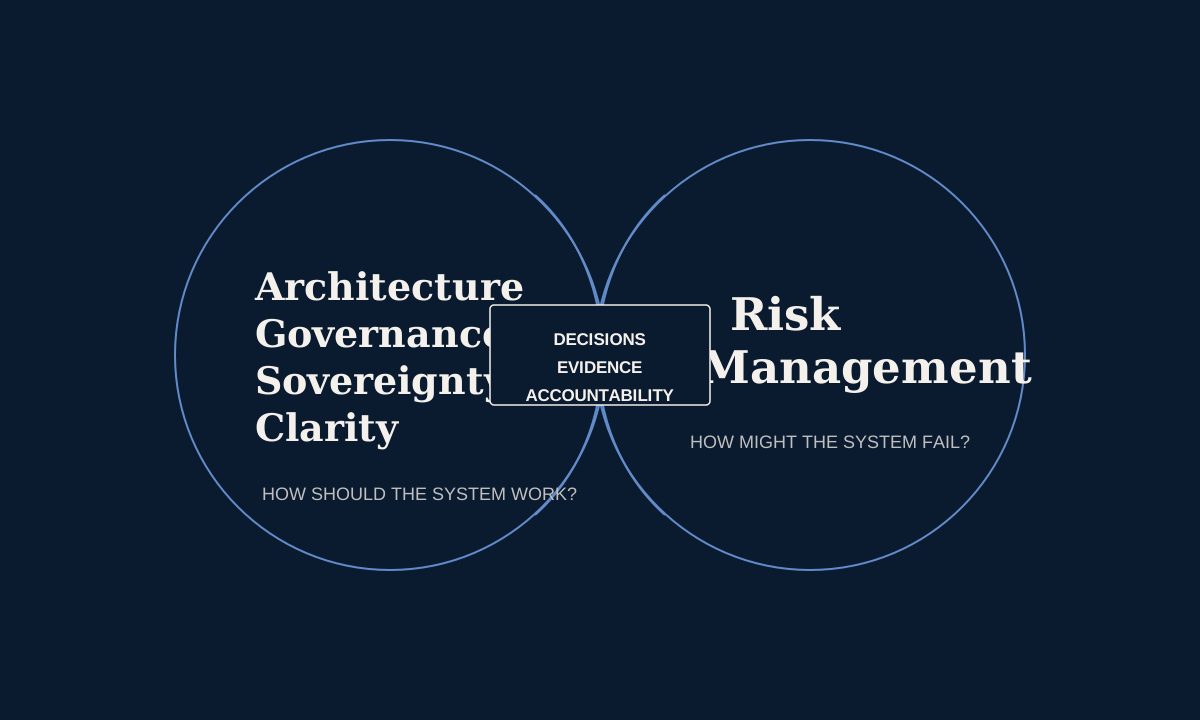
Risk management starts from objectives and services, then traces causes, dependencies, transmission, thresholds and decisions. The result is not merely a larger register. It is an operating view of exposure and control.
Capabilities
Build a decision-grade view of risk across strategy, operations, finance, technology, people and governance.
Explore →Interpret political, economic, regulatory and regional change as operational choices rather than background commentary.
Explore →Define the services that must continue, the tolerances that matter and the dependencies that can break them.
Explore →Connect technical exposure to institutional consequence, control ownership and recoverability.
Explore →Test whether a transaction can be authorised, funded, documented, completed and defended under real constraints.
Explore →Prepare institutions and systems to retain control when disruption becomes consequential and time is compressed.
Explore →Explore the complementary discipline that completes the operating view.